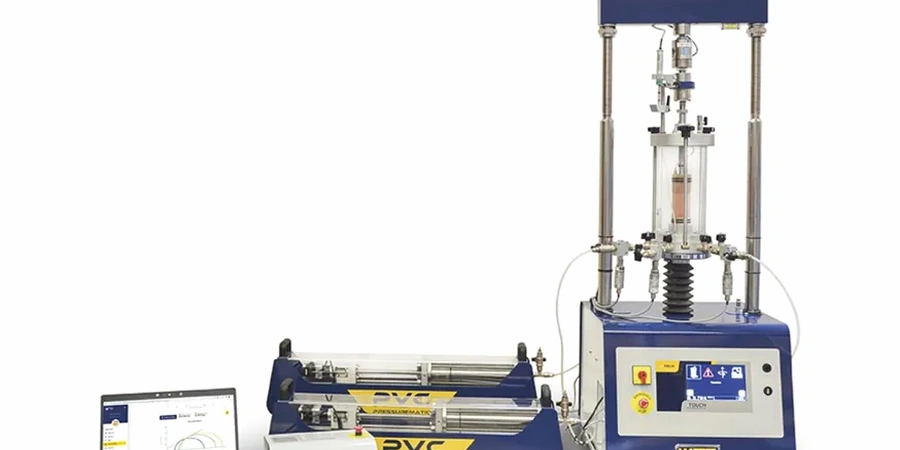
Ground investigation in Celbridge forms the essential foundation for any construction or civil engineering project, providing critical data about the soil, rock, and groundwater conditions beneath a site. This category encompasses a comprehensive range of intrusive and non-intrusive techniques designed to characterise the subsurface environment, assess geotechnical risks, and inform safe, cost-effective design. From a simple trial pit to advanced Cone Penetration Test (CPT) profiling, the scope of investigation is tailored to the specific geological setting and the proposed development. Without a robust site investigation, projects face significant risks of unforeseen ground conditions, leading to costly delays, structural distress, or even catastrophic failure.
The geology of Celbridge is dominated by Carboniferous limestone bedrock, which is often mantled by variable thicknesses of glacial till deposited during the last ice age. This till, or boulder clay, is a heterogeneous mixture of clay, silt, sand, gravel, and cobbles, making its engineering behaviour highly unpredictable. Critically, the limestone bedrock is known to be karstified in places, meaning it can contain solution features, voids, and fissures. The presence of these features creates a significant geohazard, with the potential for sudden ground collapse or differential settlement. A thorough understanding of the interface between the overburden and the bedrock, and the identification of any karstic zones, is therefore a primary objective of any investigation in the area.
All ground investigation work in Celbridge must adhere to the rigorous framework of Irish and European standards. The key national guidance is provided by the Institution of Engineers of Ireland (Engineers Ireland) and the Irish Geotechnical Society, primarily through the national annex to Eurocode 7: Geotechnical design (I.S. EN 1997-2). This standard mandates the planning of investigations, sampling procedures, and classification of soil and rock. The quality of field testing and laboratory work is governed by standards such as those from the NSAI and UKAS-accredited laboratories. For instance, an CPT test must be conducted and interpreted according to specific international references, with results feeding directly into the ground model required for design by Eurocode 7.
The requirement for a comprehensive ground investigation in Celbridge is triggered by virtually every type of development. A single-storey house extension on a raft foundation will need a basic trial pit and soil assessment, while a large-scale residential scheme will demand a detailed combination of cable percussive boreholes, rotary cored holes, and numerous CPT probes to map the variable ground profile across the site. Infrastructure projects, such as road improvements or the installation of new drainage and sewer networks, rely heavily on investigation data to design safe excavations and assess the corrosivity of the soil. Similarly, the construction of commercial buildings with deep basements necessitates a deep investigation to determine groundwater levels and the engineering parameters of the bedrock for pile design.
The primary purpose is to build a detailed ground model to de-risk construction. It identifies the soil and rock layers, their strength, and any hazards like karstic limestone voids or high groundwater. This data is legally required under Eurocode 7 to design safe and stable foundations, roads, and retaining walls, preventing costly structural failures or delays.
A site investigation is mandatory for almost all construction projects, from a single house extension to a major commercial development. It is a prerequisite for the design phase under the Building Regulations and Eurocode 7. The scale of the investigation, from a simple trial pit to a full borehole and CPT campaign, is scaled to the complexity of the project and the perceived ground risk.
The dominant hazards are linked to the local geology. The overlying glacial till is highly variable and can be soft or contain large boulders. More critically, the underlying limestone is prone to dissolution, creating karst features like voids and sinkholes. A major objective of any investigation is to detect these features, as they pose a severe risk of sudden ground collapse.
The overarching standard is I.S. EN 1997-2 (Eurocode 7 Part 2), which sets the rules for ground investigation and testing for geotechnical design. This is supported by the Irish National Annex. Field and laboratory tests, such as the CPT test and strength testing on samples, must be conducted to recognised standards, often by UKAS-accredited laboratories, to ensure results are valid and defensible.
We serve projects across Celbridge and surrounding areas. More info.