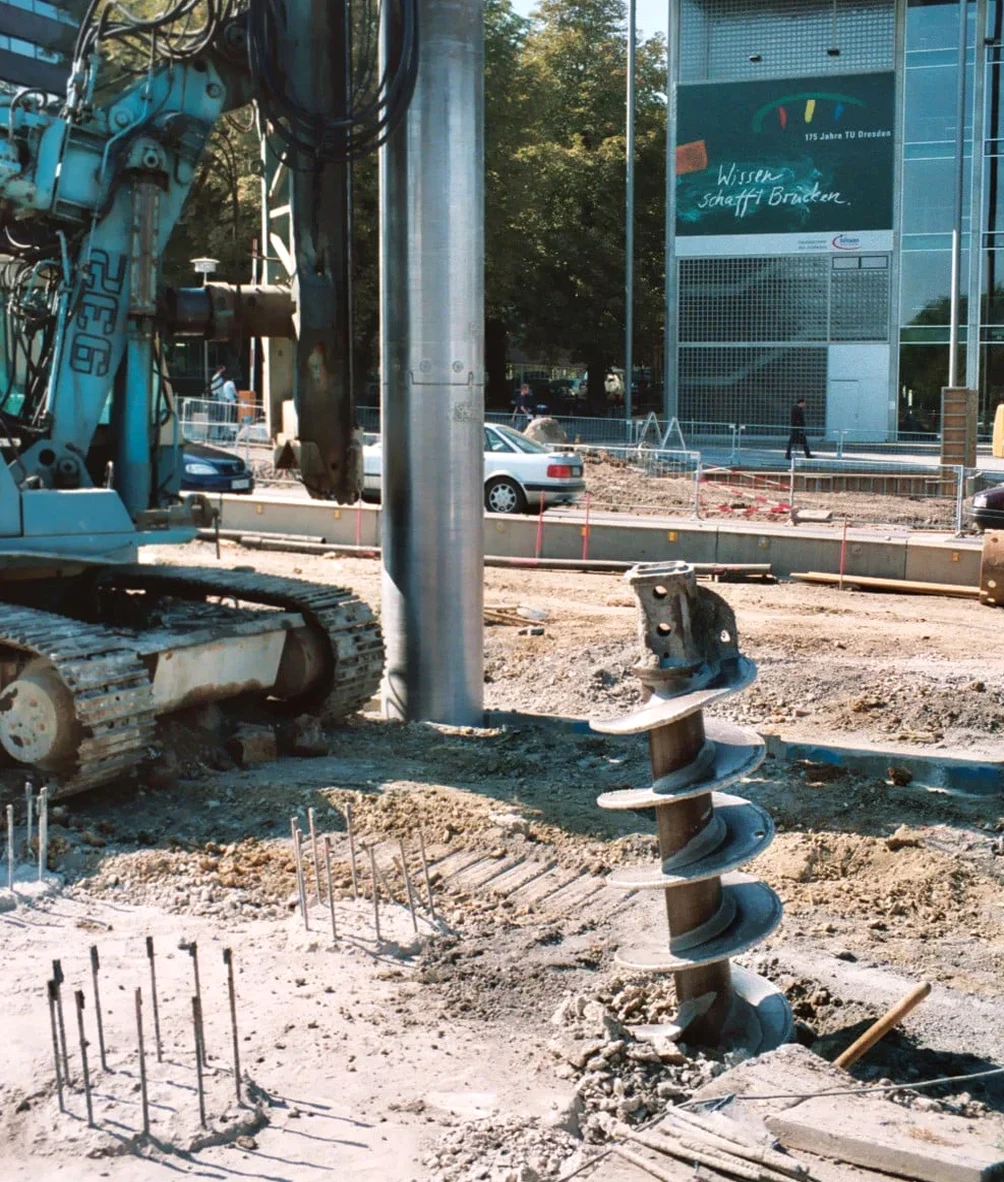
The geotechnical contrast between Celbridge's historic core along the Liffey and the newer residential expansions south of the Dublin Road tells the whole story. Near the river, alluvial silts and soft clays often extend to depths where shallow bearing is simply not viable, while the gently rising ground toward Ardclough sits over dense glacial till that can support substantial loads if the upper weathered zone is penetrated. In our experience across north Kildare, the decision to mobilize a piling rig rarely stems from a single borehole log; it emerges from understanding how these two distinct depositional environments interact beneath a single site. A CPT test through the softer fluvial sequence provides continuous resistance profiles that are indispensable for selecting the appropriate pile toe elevation and for estimating unit shaft friction in the transition zone between the alluvium and the underlying till.
Pile performance in Celbridge hinges less on the pile itself and more on correctly mapping the interface between soft river alluvium and the dense lodgement till that controls shaft friction.