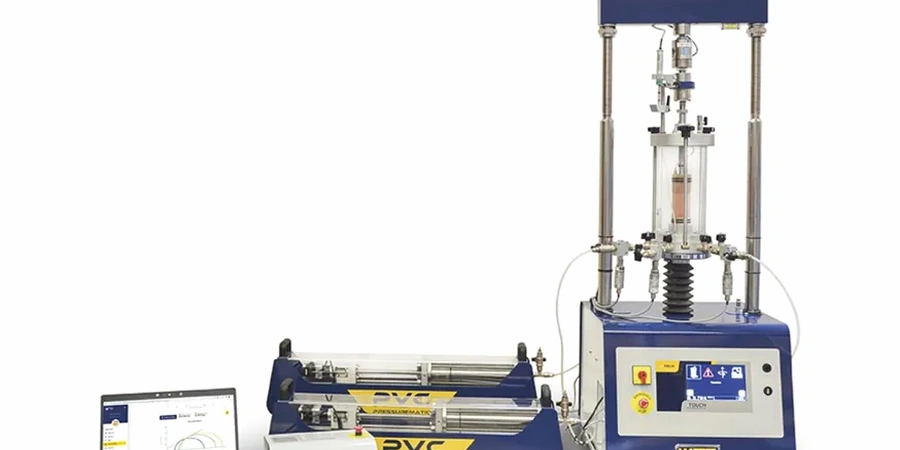
Celbridge sits at roughly 55 metres above sea level, straddling the River Liffey as it cuts through the limestone and shale bedrock of northeast Kildare. The town’s population has passed the 20,000 mark, driving a steady demand for residential and commercial development on the alluvial gravels and glacial tills that line the valley. In our laboratory, we see a direct link between this growth and the need for reliable triaxial testing: foundation designs here cannot rely on rule-of-thumb values when dealing with silty clay layers that vary in strength across a single site. The triaxial test gives us the drained and undrained shear parameters that structural engineers need to avoid overdesign or, worse, an underdesigned footing. When a site investigation brings us Shelby tube samples from a new housing scheme off the Maynooth Road, our first step is to assess the effective stress response using consolidated-undrained triaxial compression, because the Liffey’s historic floodplain deposits behave very differently under load than the stiffer till upslope. For deeper infrastructure, we often pair the CPT testing data with laboratory-derived strength envelopes to calibrate the in-situ cone resistance against the soil’s actual friction angle, a workflow that saves considerable time on large Celbridge projects.
A single triaxial test on a properly saturated specimen tells us more about a soil’s real behaviour than twenty index tests combined.