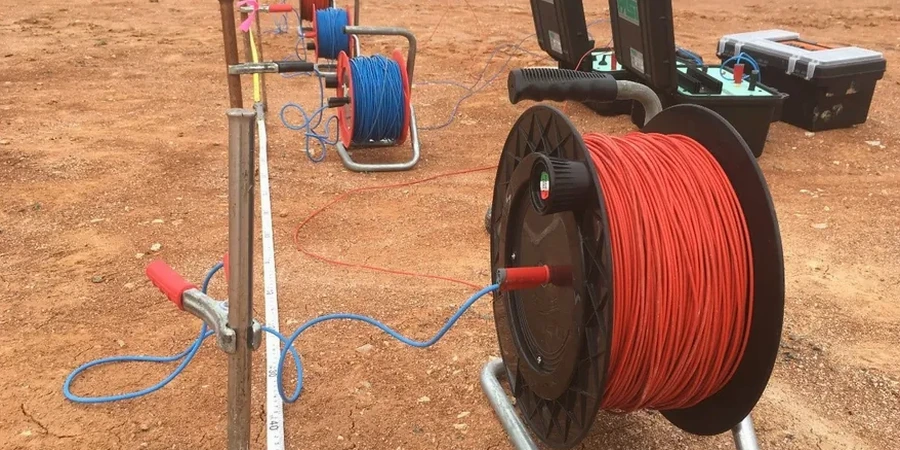
A residential development near the Liffey hit unexpected soft lenses at 4 metres last spring. No borehole caught it, but the electrical resistivity survey we ran across the site flagged the anomaly in half a day. In Celbridge’s glacial till and alluvial corridors, drilling alone can miss transitions between gravel lenses and silty clays. Vertical Electrical Sounding gives us a continuous resistivity profile with depth, letting the design team see where bearing strata actually sit. For sites close to Castletown House or along the R403, we combine resistivity lines with test pit data to ground-truth the geophysics, then feed the model straight into foundation decisions.
Electrical resistivity profiling reveals what boreholes miss: continuous stratigraphy, perched water, and karst cavities hidden between drill points.